
Great Expectations II: Support Systems
Updated: Jul 24
They pray in the square where the light finds their sleeves,
Long words dressed in linen, a performance of grieves.
But under the hem, where no eye cares to look,
Lies a widow's last coin, and a debt, and a book.
They counted her house as the price of their prayer,
Called plunder a gift, called the taking a share.
The louder the amen, the deeper the theft —a temple of noise for a conscience bereft.
(Long Robes, Short Mercy)
Truly the Pharisees in the day of Jesus were notably 'Long Robes and Short mercy' and the rebuke from Jesus sums they grievous error,
"They devour widows' houses and for a pretense make long prayers" (Matthew 23:14, Mark 12:40; Luke 20:47).
It is one of the sharpest rebukes Jesus ever gave, and let's remind ourselves again, it was not aimed at outsiders. It was aimed at the Pharisees — the Bible teachers, the synagogue leaders, the men everyone assumed were closest to God.
What makes this passage so uncomfortable is how modest Jesus' actual expectation was. He was not asking the Pharisees to become a welfare department. He was not demanding they personally rehouse every widow in Jerusalem. He was asking for something much smaller: be a support system. For them to do the little within their reach — because in God's eyes, the little is significant.
Two issues sit underneath this rebuke: how the vulnerable were treated, and the hypocrisy that made the mistreatment possible. Let's take them one at a time.
PART ONE: TREATING THE VULNERABLE

Jesus was making a principle out of a practice: the way we treat the vulnerable exposes the actual state of our heart. Not our sermons. Not our long prayers. Our treatment of people who cannot repay us.
Who are "the vulnerable" today?
In first-century Judea, widows sat near the bottom of the social ladder — often without inheritance rights, without income, and dependent on the goodwill of others. The modern equivalent isn't a single group; researchers describe vulnerability as a condition, not just a category. Health policy literature defines it as arising from an interaction between the resources available to a person and the challenges life throws at them — vulnerability results from developmental problems, personal incapacities, disadvantaged social status, weak interpersonal support networks, and degraded environments, compounding over a person's lifetime.
More concretely, academic sources point to overlapping groups: children, the elderly, the homeless, prisoners, the poor, racial and ethnic minorities, and the uninsured, along with rural residents who lack access to care. Others frame it more broadly still, as anyone whose demographic, geographic, or economic circumstances block their access to essential services.
So the modern "widow" might be:
The elderly person living alone on a fixed income.
The single parent with no family safety net.
The refugee or migrant without documentation.
The disabled person without an advocate.
The retired minister or missionary with no pension after a lifetime of service.
The child in an unstable home.
What the Law required
Before we get to what Pharisees owed widows, it's worth being clear on what God's Law itself required — because Jesus wasn't inventing a new standard. He was holding the Pharisees to one that already existed. Moses in the Law (which the Pharisees claimed to promote) was explicit and repeated on this point:
Deuteronomy 24:19–21 — farmers were told not to go back for a forgotten sheaf, not to strip the vineyard bare, and not to beat the olive tree twice. What was left was for "the sojourner, the fatherless, and the widow." This is not charity as an afterthought; it's a structural provision built into the harvest itself.
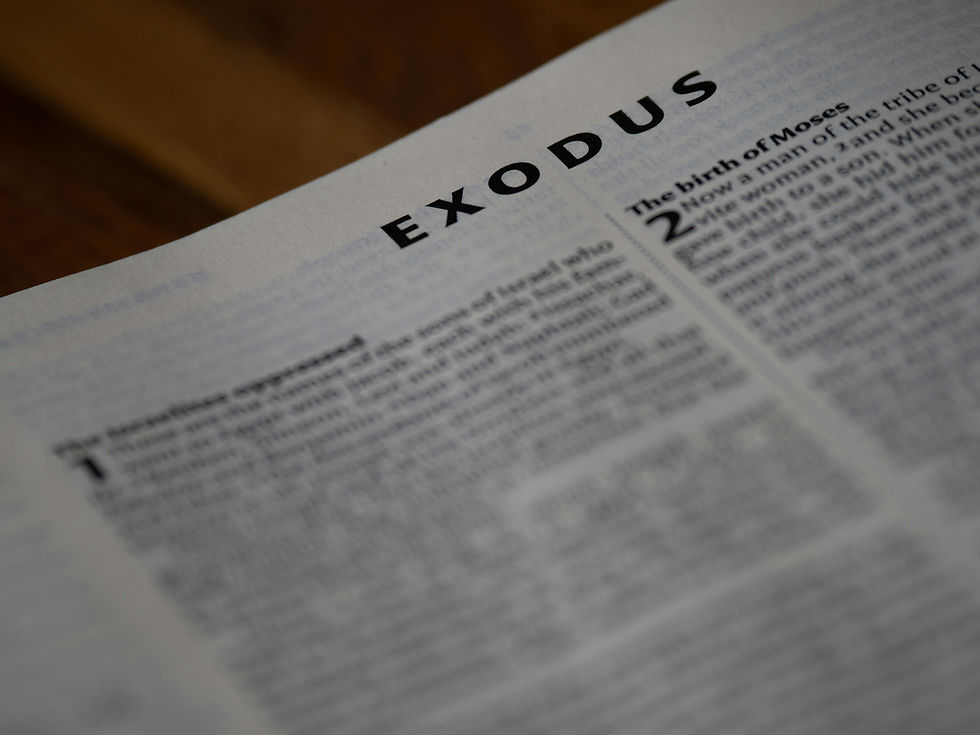
Exodus 22:22–24 — a direct warning: "You shall not mistreat any widow or fatherless child. If you do mistreat them, and they cry out to me, I will surely hear their cry." God attaches His own reputation to how widows are treated.
Deuteronomy 25:5–10 — the levirate marriage law, ensuring a widow was not left without name, inheritance, or protection.
1 Timothy 5:3–16 — by the New Testament era, the early church had refined this further, distinguishing "widows indeed" (those with no family to support them, who the church should support) from those who had family able to help. The responsibility was shared and layered, not dumped entirely on one institution.
Notice what the Law does not say. It does not say the community must fully provide for every widow indefinitely regardless of circumstance. It says: leave the gleanings, don't oppress, don't ignore the cry. It's a support structure — margins built in, doors left open — not full custodianship. That is precisely Jesus' point against the Pharisees: even this modest, built-in structure, they were subverting for profit.
The role of government: Case Studies in England and Germany
Modern developed nations have, in effect, formalised what ancient Israel encoded into agricultural law — turning "leave the edges of the field" into statute and social insurance.
England built its modern welfare architecture on the 1942 Beveridge Report's ambition to defeat the "five giants" of want, disease, ignorance, squalor, and idleness, and followed it with the National Assistance Act of 1948. That legacy continues today in the Care Act 2014, which places a statutory duty on local authorities to safeguard adults at risk. The Act defines vulnerable adults as those who may be unable to protect themselves from harm, abuse, or neglect because of physical or mental disabilities combined with care and support needs, and it requires councils to conduct safeguarding enquiries whenever such a person is at risk. Its guiding principles include empowerment, prevention, protection, partnership, and accountability — in other words, government sees itself as obligated to intervene when the vulnerable are being harmed, not merely to observe. This is apart from the many provisions for children like free/reduced bus passes, subsidised services hospitality, free dental care and strong emphasis on safeguarding etc.
Germany takes a different but complementary approach through its constitutionally embedded Sozialstaat (welfare state) principle. The system rests on solidarity: those able to work and support themselves, while the state helps those who cannot, through pension, health, unemployment, and long-term care insurance funded by mandatory contributions from all working adults. For widows specifically, Germany's statutory pension system pays a surviving spouse's pension calculated as a percentage of the deceased's earnings, with enhanced provision for widows who are older, disabled, or raising children. The state even maintains special coverage systems historically set up for war widows and orphans.
Both nations demonstrate something important: government can carry real, structural weight for the vulnerable — pensions, safeguarding duties, statutory enquiries. But this is precisely why Jesus' words to the Pharisees are so pointed. He was not asking them to replicate a welfare state. He was asking for something a government cannot legislate: personal, relational care.
No statute can force someone to notice a lonely widow, sit with her, or treat her house as sacred rather than as spoils. That's a heart issue, and it's the one thing Jesus held the Pharisees accountable for.
A call that has not gone away
As of the time of this article in 2026, my heart was broken when I heard of retired ministers in Africa going through tough times. Men who had spent decades serving in Africa, planting churches, discipling nations, pouring out their strength for the Gospel — now unable to feed themselves in old age. That news birth something new in me. I must be a support system and so should every Christian. These are not abstract "vulnerable populations" in a report. These are the modern widows: people who gave everything to a mission and were left with no structure of support when the work was done.
This is the ministry Jesus is describing, and it is not reserved for pastors or governments. It is a call to every believer with any measure of influence — a leader in business, a manager in an office, an elder in a church, a professional with a platform and literally everyone. The expectation is not that you personally solve poverty. It's that you become a support system: you notice, you contribute what's in your hand, and you refuse to let the vulnerable become invisible to you. In God's accounting, as the passage on the widow's mite makes clear a few verses later (Mark 12:41–44), the little offered sincerely outweighs the much offered for show.
PART TWO: THE GREAT HYPOCRISY
Here is where Jesus turns from what the Pharisees did to what was happening underneath it. These were men who prayed long, visible prayers — the kind that drew attention and respect — while their private lives ran on exploitation. Jesus names this directly: they used spiritual performance to offset moral debt. Long Robes, Short Mercy!
This is more dangerous than plain wrongdoing, because plain wrongdoing at least announces itself. Hypocrisy dresses wrongdoing in religious credibility, and in doing so it does two things at once: it hides the rot beneath a respectable surface, and it gives false hope to everyone watching, who assume that visible devotion equals genuine integrity.
How this plays out — then and now
This pattern is not unique to first-century Jerusalem. It shows up constantly, in forms that feel almost respectable:
Redemptive laundering — someone steals or defrauds, then gives part of the gain to charity or the church, as if generosity can retroactively cleanse the theft.
Saul and the forbidden loot (1 Samuel 15) — commanded by God to destroy the Amalekites and 'everything' with them, Saul instead spared the best of the plunder, telling Samuel it was to be sacrificed to the Lord. Disobedience, rebranded as worship.
Attendance as alibi — frequent, visible worship attendance used to build a reputation that quietly excuses ongoing bad behaviour.
Scripture as shield — quoting verses selectively to justify decisions that scripture, read honestly, would actually condemn. This is straight from the playbook of Satan as shown in the temptation of Jesus.
Fasting as performance — physical religious discipline marketed outward as holiness while the inner life stays untouched.
Leadership as cover — using a position of spiritual authority to hide immorality, on the assumption that the title itself will deflect scrutiny.
The list has no real end, because the underlying move is always the same: substitute the appearance of righteousness for the practice of it, and hope no one — including God — notices the difference.
What God actually expects of leaders
Scripture is not vague here. Micah 6:8 collapses the whole requirement into one sentence:
"do justly, love mercy, and walk humbly with your God."
Note the order — justice and mercy come before the walk with God is even mentioned, because the walk is proven by the justice and mercy, not the other way round. James puts it just as bluntly:
"pure and undefiled religion... is this: to visit orphans and widows in their affliction, and to keep oneself unspotted from the world" (James 1:27).
Religion that doesn't reach the widow and doesn't guard the leader's own integrity isn't "pure" — it's decoration.
God expects leaders to be a hand, not a headline — private obedience that matches public appearance, care for the powerless that costs something, and enough self-honesty to admit when the inside doesn't yet match the outside.
A Word of Caution for Leaders
Submit to correction, not just admiration. Hypocrisy grows fastest around leaders no one is allowed to challenge. Build in people the permission to say the hard thing.
Practice private disciplines that no one sees. If every act of devotion is public, ask why. Fasting, giving, and prayer done quietly (Matthew 6:1–18) train the heart rather than the image.
Let confession be routine, not catastrophic. Leaders who only "come clean" after being caught have built a culture where hiding was always the plan. Normalise honesty before exposure forces it.
Measure yourself by how you treat those who can't repay you. Not donors, not congregants who can promote you — the widow, the intern, the retired worker with nothing left to offer. That relationship is the real audit of the heart.
Refuse to let ministry or position function as an excuse. A title is not evidence of character; it's a stewardship that can be, and often is, abused.
Conclusion: Support, Not Show
Put the two halves of this long read side by side and the message sharpens: Jesus did not condemn the Pharisees for failing to run a welfare system — He condemned them for failing to be present, honest, and generous with what little was actually required of them, while dressing up the failure in impressive religion.
The call has not changed. Governments — England with its safeguarding duties, Germany with its social insurance — can build real structures for the vulnerable, and where they do, that is worth acknowledging. But no legislation can make a person actually see the widow next door, the retired missionary with empty cupboards, the intern nobody checks on. That's a job description with only one line: be a support system, sincerely, without needing an audience for it.
And the surest way to know if that's happening is not how long someone prays, but how they treat the person who can never pay them back.
Read Great Expectations I: Gatekeepers


Such an insightful read.